Brand is often treated as surface. An afterthought added after direction, structure, and strategy are already in motion. For Slavena Tisheva, the logic is reversed. She approaches brand as an operating system, the invisible architecture that shapes how decisions are made, how uncertainty is absorbed, and how organizations align when...
The venture capital model is under fire again. Founders complain about dilution and loss of control. Commentators question whether VCs create real value or just inflate valuations. Aspiring entrepreneurs wonder if bootstrapping isn’t the more honest path after all.
I’ve heard these criticisms for years — as a founder,...
Most CEE startup founders start their entrepreneurial journey by building an agency, like Omnisend, which began as a digital marketing agency, or MailerLite, which started as a web design studio in 2005 and pivoted in 2010 to productize email marketing. It’s a simpler way to generate revenue, learn the...
How is digital transformation changing consumer lending, and what role will AI and human judgment play in the future of banking?
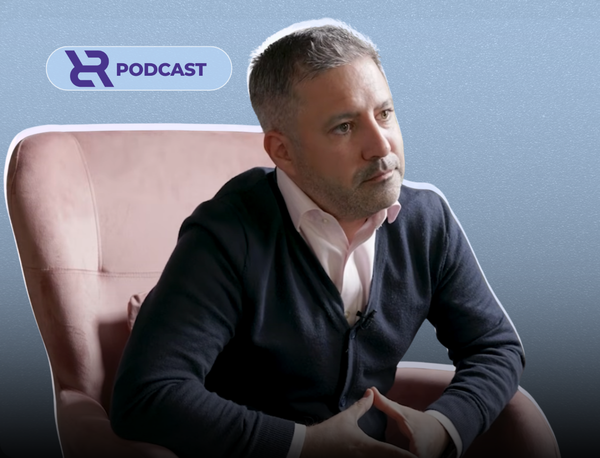
In this episode of The Recursive Podcast, we sit down with Mircea Gologan, Head of Consumer Lending Business at DSK Bank, to explore how one of Bulgaria's largest banks is rethinking lending in an increasingly digital and data-driven world.
In this conversation, you will hear about:
✓ How DSK combines customer feedback, behavioral analytics, and automated credit decision-making to deliver more personalized financial services. ✓ How banks balance digital innovation with responsible lending practices. ✓ How traditional banks are responding to growing competition from fintech companies. ✓ The growing role of AI-powered assistants in banking and financial services. ✓ Why human expertise remains essential in an increasingly automated industry. ✓ What the next generation of consumer lending could look like.
AI is transforming how companies operate, make decisions, and interact with customers. But as businesses rush to adopt new tools and increasingly autonomous AI agents, a critical question emerges: Are they moving faster than their security and governance can keep up?
In this episode of The Recursive's Roundtable, we explore the growing tension between innovation and control, and what it takes to adopt AI responsibly without slowing down progress.
The discussion brings together three experts from the AI, technology, and telecommunications sectors:
The conversation explores the risks of shadow AI, the differences in risk appetite between startups and large enterprises, and the challenges of protecting sensitive corporate and personal information. The speakers also discuss the role of trust, employee education, and human oversight, as well as AI's potential to strengthen cybersecurity by identifying vulnerabilities before attackers exploit them.
Key topics discussed:
☑️ Innovation vs. regulation: Is Europe's approach to AI governance slowing down innovation and putting European companies at a competitive disadvantage?
☑️ Data privacy and shadow AI: What happens to sensitive corporate and personal data shared with AI tools, and how can companies manage the risks?
☑️ AI agents and human oversight: How much autonomy should businesses give AI systems, and when should humans remain in control?
☑️ Trust, risk, and cybersecurity: How can companies balance AI adoption with security, and can AI itself become a tool for identifying and preventing cyber threats?
Three guests, three very different jobs, one thing in common: they're all in their twenties and already taking on a level of responsibility that usually comes later in a career.
In this episode of The Recursive Roundtable, we talk with Viktoriya Markileva (Head of Space Services at EnduroSat), Georgi Nichev (Marketing Specialist at Helios Marine, Co-Founder of Scylla), and Maria Nikolova (Strategic Partnerships Development Manager at BESCO) about what it's actually like to be trusted with real responsibility this early — what makes someone trust you with it, how they handle it, and whether a career needs to follow a clear path at all.
In this episode, we explore:
🟣 How Gen Zs think about failure, 🟣 what hustle culture looks like from the inside, 🟣 what progress actually means to them, 🟣 and whether they'd be willing to wait years for the next step in their career.
💡 This conversation is essential for entrepreneurs looking to hire young talent, and for any Gen Z professionals wondering if they are ready to take the leap into a leadership role.