


Greece’s innovation ecosystem maintained its growth momentum in 2025, supported by strong investment activity and signs of a maturing market. More than €732 million was deployed across 95 funding rounds during last year, marking a 35% increase from 2024.
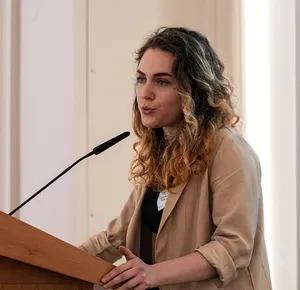
Yet according to Filippos Zakopoulos, Managing Partner at the innovation platform Found.ation, the next stage of growth will depend less on funding and more on structural transformation.
"I don't want to use the word mature market because we're still a small market, but we're going there. We're maturing." For Zakopoulos, the most encouraging sign is not a single funding round or headline exit, but the ecosystem's growing stability.
"There are a lot of investments, there are still things happening, it's a vibrant ecosystem. And what is really important for us is that the availability of capital seems to have been firmly established."
Capital is no longer the biggest concern
One of the strongest indicators of progress is the expansion of Greece's venture capital landscape. In 2025, Greece reached a record 18 active VC funds, supported largely through initiatives led by the Hellenic Development Bank of Investments (HDBI). Zakopoulos believes this institutional support has been critical to the ecosystem's development.
"The way the Greek startup ecosystem really got established was through the investment vehicles that were created over the past decade. More recently, HDBI has been carrying the flag, and most of the active venture capital funds are backed by them."
Another notable development was the rise of venture debt, an instrument that historically played only a minor role in the Greek market.
"We saw venture debt before, but it was never really established as a financing mechanism. That's why this year we decided to monitor it separately. We believe it could become another path for money entering the Greek ecosystem."
Perhaps more importantly, Greek startups are increasingly attracting foreign investors. Alongside the growth of local VC funds, an increasing number of rounds involve investors from Europe, the UK, and the US. While still early to draw definitive conclusions, this trend may point to a broader interest in Greek startups from global venture capital markets.
More growth-stage funding
While most investment rounds continue to take place at the pre-seed and seed stages, a growing share of capital is now flowing toward more mature companies.
This is a positive shift for an ecosystem that historically struggled with scale-up financing. "Around 70% of the deals were pre-seed and seed, but most of the capital was invested in Series A and later-stage companies," says Zakopoulos.
He attributes this partly to changes in how funds are being deployed. "Earlier generations of funds were synchronized because they were created at the same time. Now the capital is spread more evenly across years and stages, which is healthier for the ecosystem."
AI leads, but Greece still lacks sector specialization
Artificial Intelligence was the most active investment category in 2025, followed by HealthTech. Yet Zakopoulos is cautious about reading too much into sector rankings. "I'm a bit skeptical about highlighting AI as a sector leader because today almost every startup claims to have an AI component."
Instead, he argues that Greece's challenge is not identifying trends but developing clear areas of specialization. "Historically, Greece has had startups across almost every sector. What we haven't really developed yet is deep specialization in a few areas where we can become globally known."
HealthTech remains one of the country's strongest verticals, while defense technology emerged as an increasingly visible category in 2025.
"Following broader European trends, we saw investments in defense technology. Before that, I don't even know if we had any significant defense investments. Now we're seeing the impact of global developments reflected in startup activity."
Brain gain is becoming visible
After years of losing talent abroad, Greece may finally be seeing the first signs of reversal. Zakopoulos describes the shift as gradual rather than dramatic. "I do believe there is a small trend toward brain gain. Not only because of government initiatives, but because of remote work, technology opportunities, and companies choosing to establish a presence in Greece."
He points to Pfizer's digital innovation center in Thessaloniki as one example of how multinational investments are helping attract talent back. "Many of the people working there are Greeks who previously lived abroad and decided to return because they saw a strong employer and a meaningful opportunity."
On another note, Greece's universities continue to generate strong technical talent, particularly compared to neighboring countries. However, turning research into companies remains a challenge. "If we compare our universities with others in the region, we have very good universities and very good talent. That's our advantage."
He argues that the challenge is primarily structural. Many aspects of the legal framework governing spin-offs remain unclear, including ownership arrangements and the role universities should play, creating uncertainty and friction in the process.
At the same time, Zakopoulos sees a gap in entrepreneurship education. While Greece produces highly skilled biologists, engineers and researchers, there is a need to strengthen business capabilities by equipping technical talent with the knowledge and skills required for entrepreneurship and company building.
The corporate challenge: everyone wants innovation, but few invest enough
Found.ation works extensively with large corporations across banking, insurance, retail, shipping and technology.
From Zakopoulos' perspective, attitudes toward innovation have improved considerably. "Five years ago many corporations worked with startups mainly for CSR or marketing reasons. Today they increasingly understand that startups can be a source of R&D, new products, new talent and new business opportunities."
Yet significant barriers remain, Filippos tells me. While most companies recognize the need to transform and invest in new skills, these initiatives often struggle to compete with more immediate business priorities.
"Reskilling and innovation don't generate immediate returns. The benefits appear later, while sales and operational investments produce results today," he adds.
The three challenges that will define the next decade
When asked about Greece's biggest obstacles, Filippos identifies three.
The first is uncertainty. "For the first time in many years, I would say that global uncertainty is one of the biggest problems. Companies are hesitant to invest because they don't know what comes next."
The second is culture. "Historically, Greece became very good at optimization. We became very good operators. What we now need is a culture of creators."
And the third is coordination. "We still haven't fully connected the three pillars: government, academia and industry."
While progress has been made, particularly through digital transformation efforts since 2020, he believes the ecosystem's future growth depends on bridging those gaps. "The ecosystem is moving in the right direction. The challenge now is making sure all the different parts move together."


Member discussion