


For years, the story of Bulgaria's tech and business ecosystem was one of brain drain. Highly skilled professionals left the country to build successful careers in London, Silicon Valley, and beyond. But the tide is turning. Instead of just exporting talent, Bulgaria is increasingly ‘exporting’ companies – businesses founded by Bulgarians, backed by international capital, and capable of competing on the global stage.
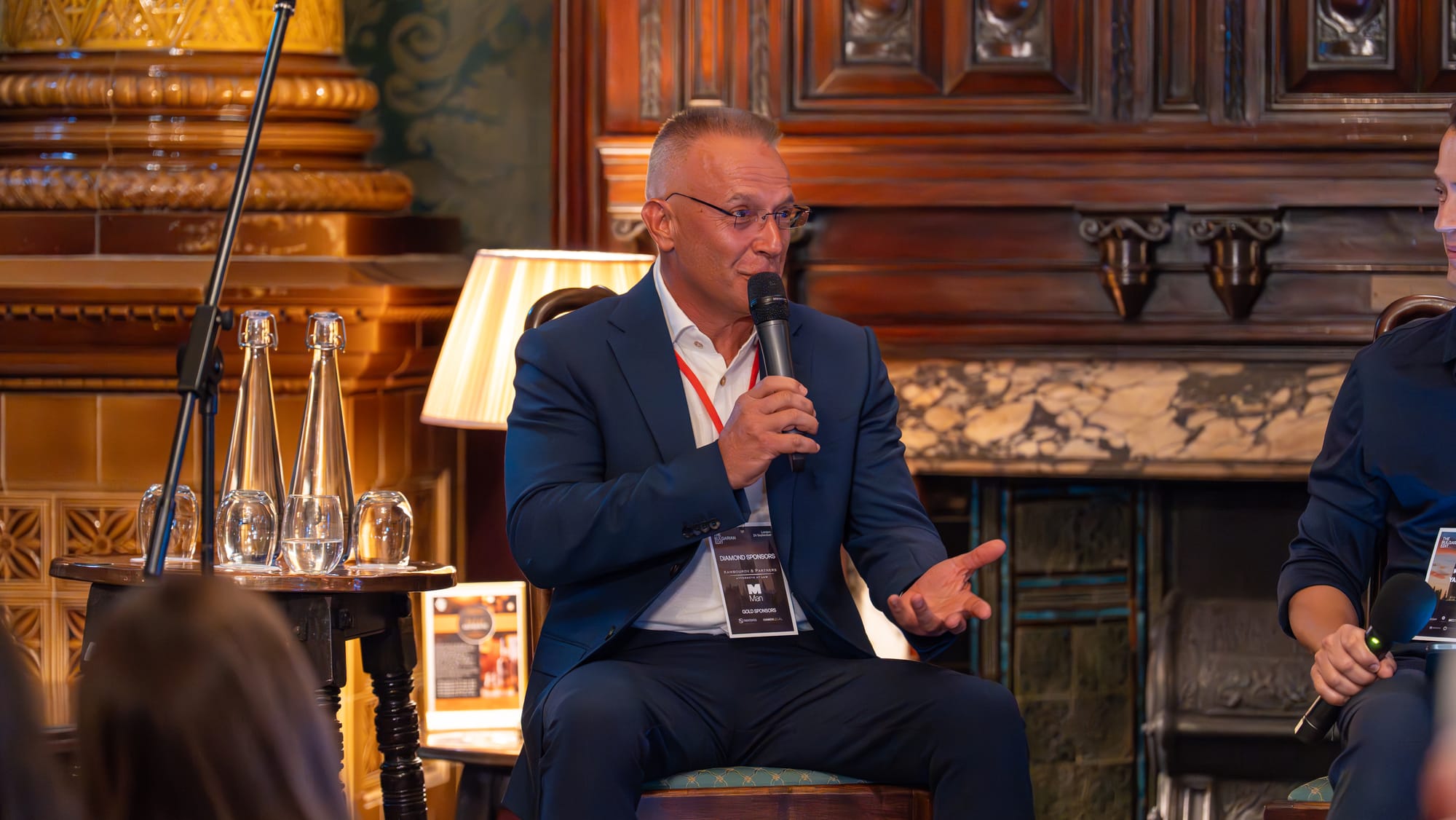
This shift was the central theme at The Bulgarian Edit: Beyond Borders, a recent three-day programme in London, organized by The Bridger Network, BG Founders Club, BBCC Expansion Bridge, Bulgarian Angels Club, Millennium Club Bulgaria, and Bulgarian Professionals UK.
The €500 million proof point
If there is one story that encapsulates this transition from local talent to global enterprise, it is that of myPOS. Founded by Hristo Georgiev, the fintech company represents a clear proof point of what Bulgarian entrepreneurship can achieve.
Georgiev's story started well before the eventual sale of the company. At 19, he was already working in software, later moving into finance before becoming an entrepreneur. The problem that eventually became myPOS was relatively simple: small merchants needed a way to accept card payments without waiting days for money to become available. What mattered, Georgiev explained, was not simply building a product that was technically good. The product had to solve a real market problem.
 myPOS
myPOS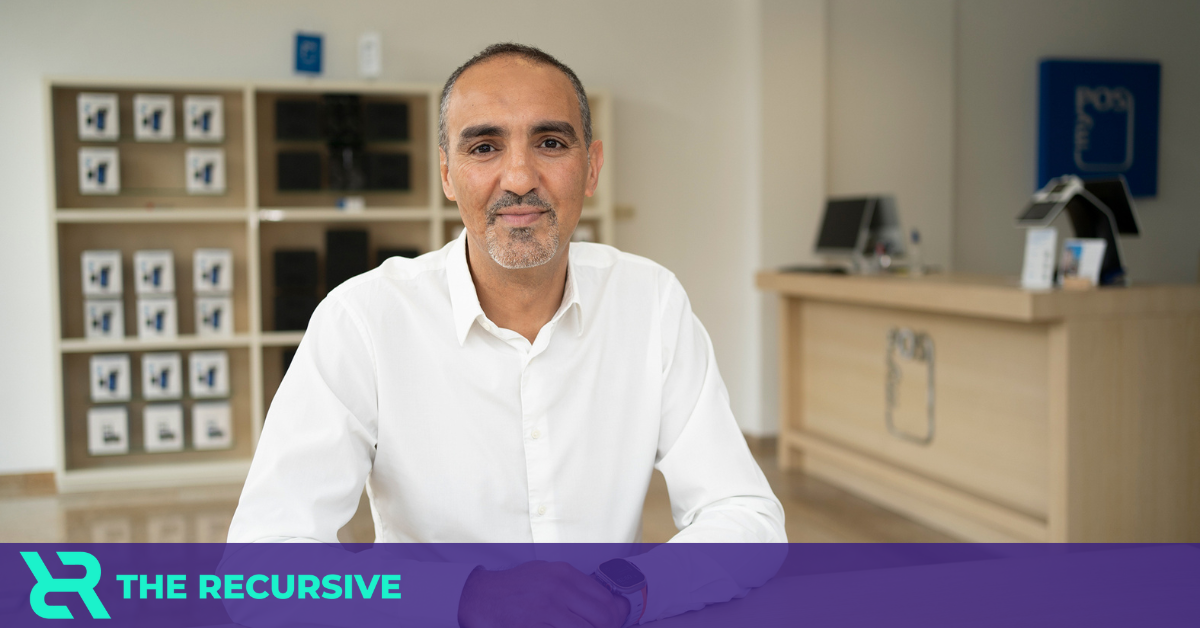
His experience with investors in London reinforced that distinction. The question was not only whether the technology worked, but whether the company was solving a problem that established financial institutions were structurally unlikely to solve themselves not because they cannot, but they’re not interested in solving for a number of reasons.
“You don’t need the most complex solution or the most unique product. Sometimes, the opportunity is simply to solve a problem that no one else is interested in solving.”
By the time of its landmark acquisition by Advent International in a deal reported at around €500 million, myPOS had become a genuinely international business, operating across 18 countries.
This exit wasn't just a financial milestone for one company; it served as a powerful signal to international markets that Bulgarian-founded companies can reach significant scale and attract top-tier global private equity.
The €15 billion value of Bulgaria’s diaspora
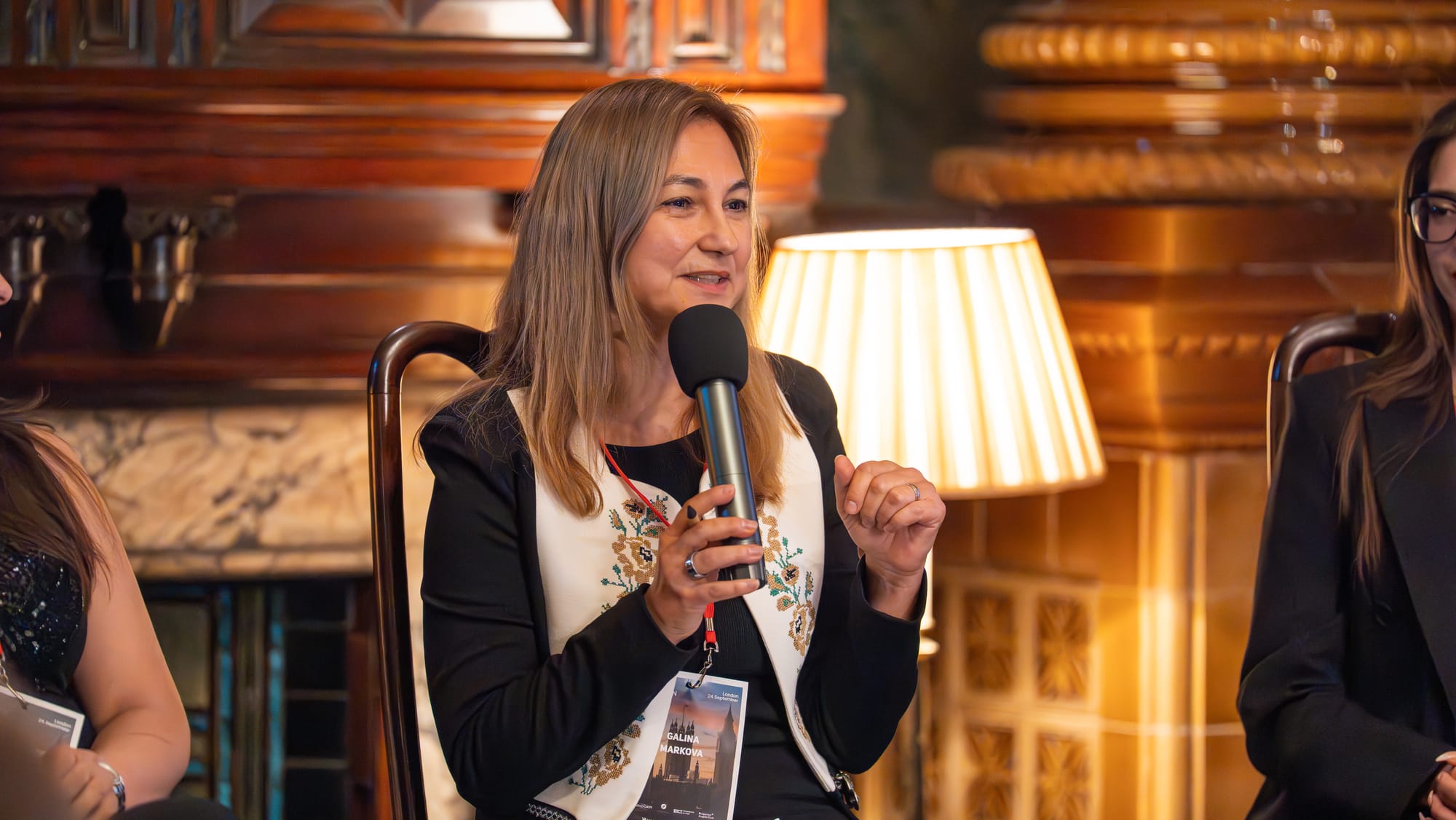
A central theme of the gathering was the scale of what Bulgarian founders have already achieved, often under the radar. Galina Markova of the Bulgarian Angels Club highlighted that the enterprise value of the local entrepreneurial ecosystem has reached impressive heights. When factoring in the unicorns created by the Bulgarian diaspora around the world, that value is estimated at 15.3 billion euros, shares Galina.
An international expansion rarely happens through a single introduction. And here comes the crucial value of the ecosystem and supporting organizations. As Gery Valova, founder of BG Founders Club, put it during the event: "Not only financial capital, but relationships, expertise and access to people who can help a founder understand a new market."
The point is that one organisation cannot provide everything a founder needs, but that different organisations can cover different parts of the journey and make it easier for people to move between them.
“The value of an ecosystem is what happens between organisations" pointed Nikola Likov, Chairman of The Bridger Network.
Turning a blank canvas into a global brand
To systematically produce companies capable of such scale, the ecosystem needs infrastructure, and that is where the diaspora comes in.
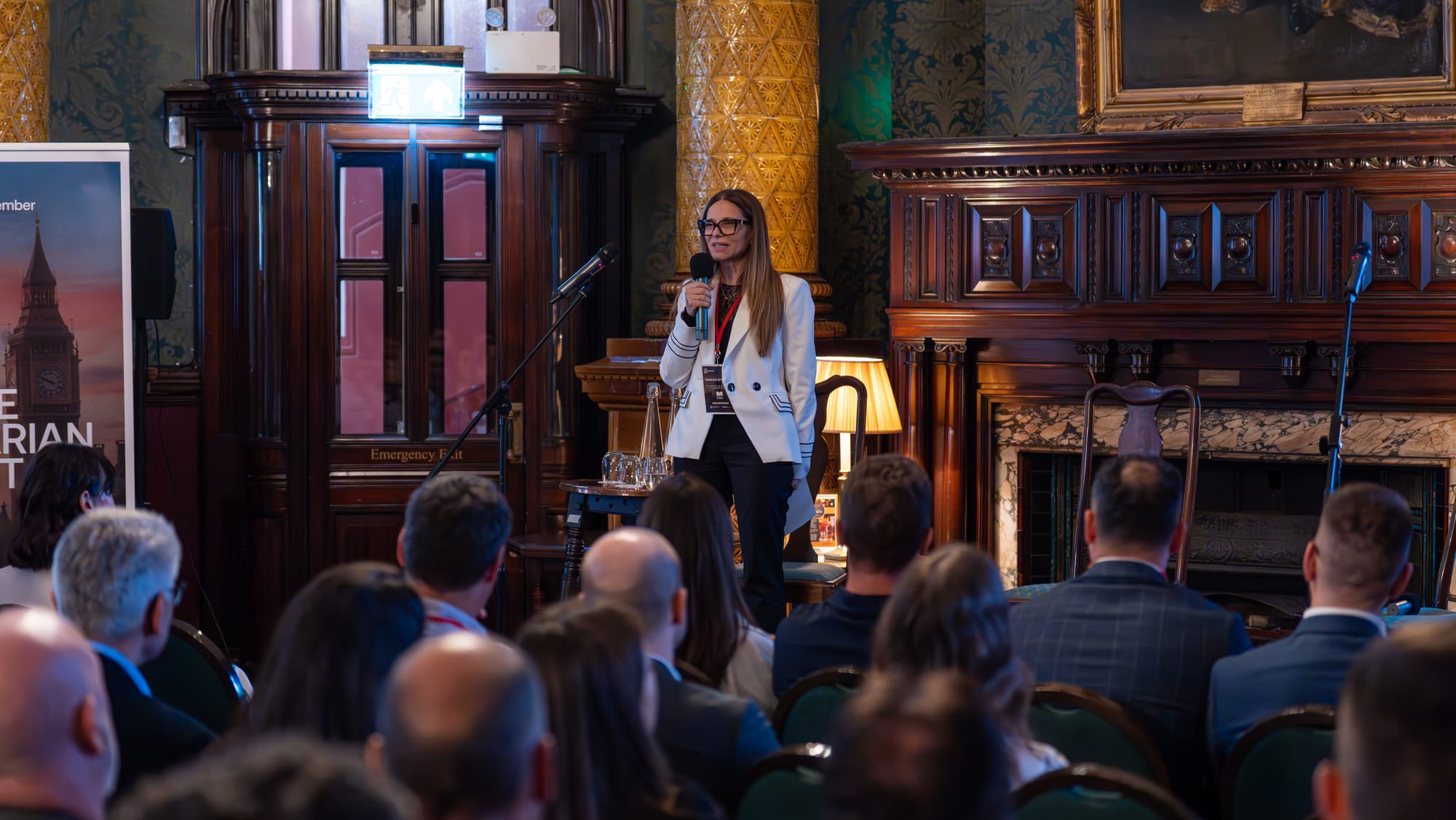
When Bulgarian companies look to scale internationally, they do not just carry their own products into the market – they carry their country's reputation with them. Addressing this dynamic Oliver Yonchev, co-founder of AI company Potentially, pointed out that Bulgaria's lack of a dominant global association is not a problem, but rather a distinct advantage. While nations like Estonia and Albania successfully hijacked narratives to punch above their weight globally, Bulgaria remains a blank canvas ready to be shaped.
 Dilyana Haralanova
During the event, author Ivaylo Kunev stressed that expats do not necessarily need to return home to make a tangible impact on the local ecosystem. Instead, they can actively back young Bulgarian entrepreneurs and help them navigate highly competitive global markets.
“The diaspora is not something Bulgaria needs to bring back," Kunev noted.
Together with Mitko Yankov, Metasim, they argue that "The Bulgarian diaspora does not have to be treated simply as a pool of people who left the country and might eventually return. It can also function as an international network of knowledge, relationships, capital and market access."
A 100 faces of Bulgarian stories in the UK
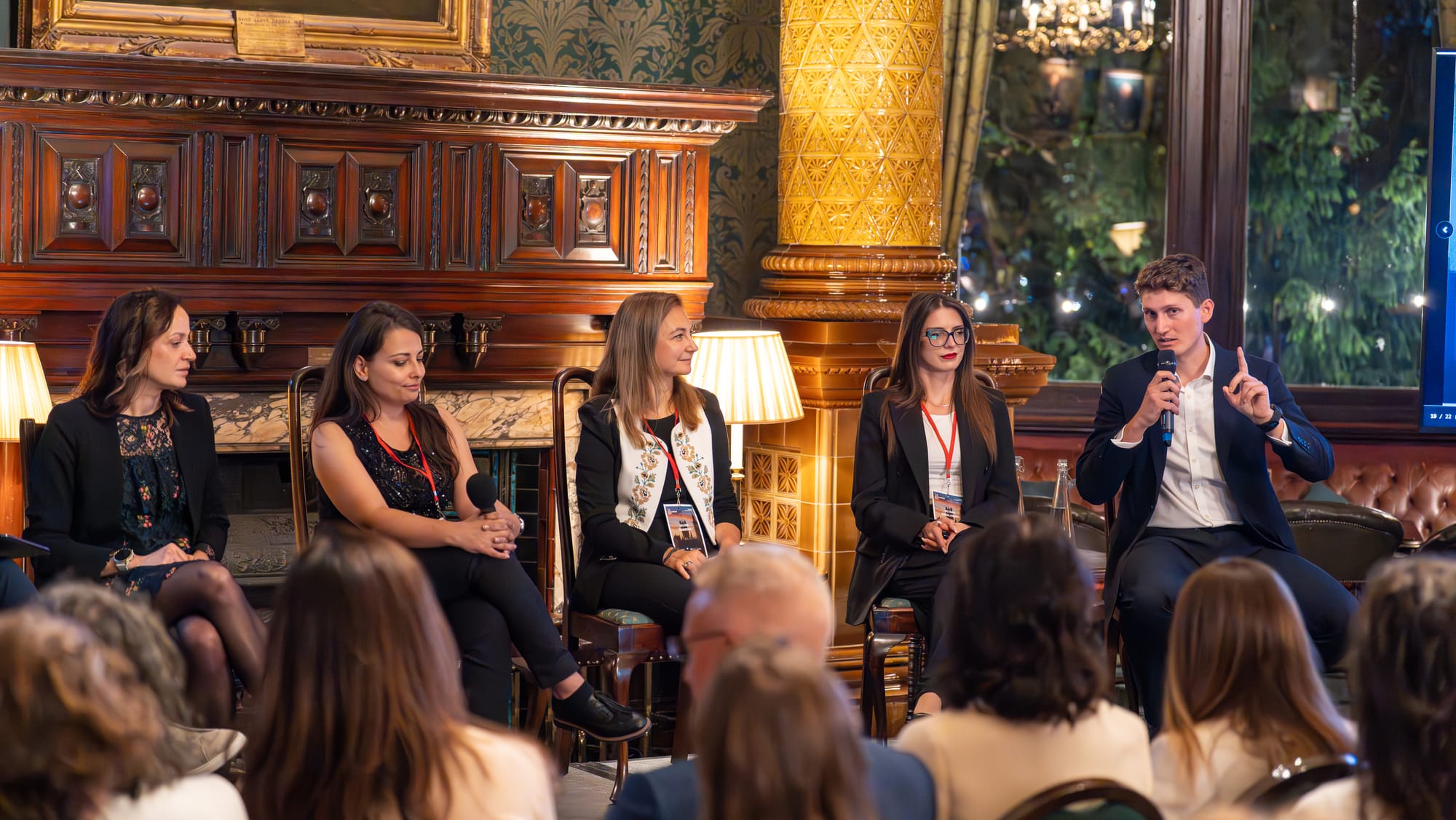
The evening ended with recognition of 100 successful Bulgarians in the UK, but perhaps the more interesting question is what happens next.
The transition from a talent exporter to a hub of scalable businesses is well underway. With the right infrastructure, strong diaspora networks, and more proof points like myPOS, the question is no longer if Bulgaria can build globally, but who will be the next to do it.


Member discussion