


In the world of technology and venture capital, “serendipity” is a word often thrown around as if it were a magical, unsummoned force. We like to imagine that the next billion-dollar idea or the perfect co-founder pairing happens because of a chance encounter at the right moment. But according to a veteran of the Central and Eastern European (CEE) ecosystem — someone who has spent the last several years leading Venture Café chapters in Warsaw, Berlin and connecting it globally — serendipity isn’t a stroke of luck. It is a piece of infrastructure that must be built, maintained, and engineered.
In a deep-dive conversation with Ewa Emilia Geresz, we explore how the region is struggling to shed its survivalist mindset in favor of a collaborative model that could finally help it scale alongside top western markets.
From Poland and Germany, to Uzbekistan and Taiwan
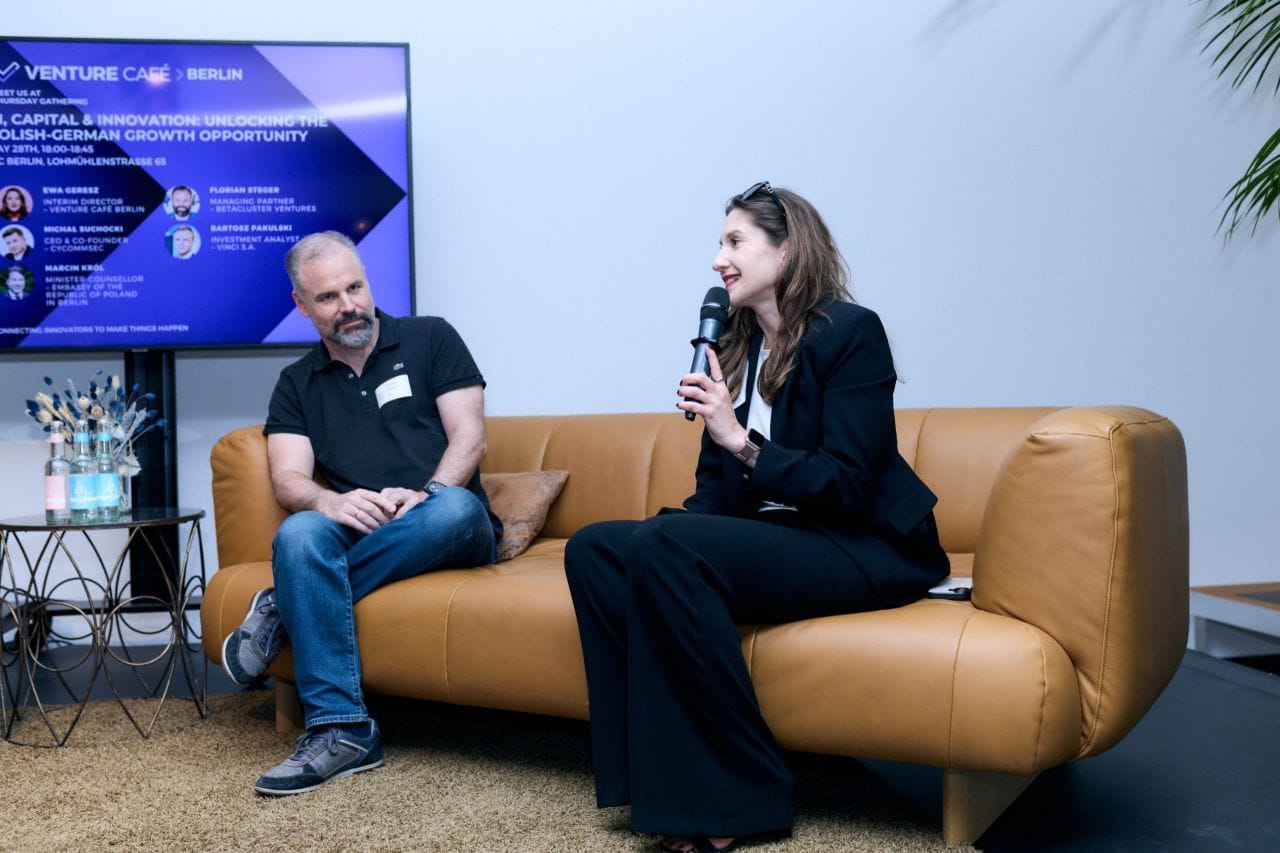
For Geresz, making these connections work requires moving past symbolic handshakes. During a recent panel on Polish-German tech collaboration at Venture Café Warsaw, which Geresz moderated alongside panelists Lisa Brauer and Dr. Philipp Johannes Nolte, the conversation focused on a clear shift in perception. German enterprise and investor networks are increasingly viewing Polish startups not just as interesting companies to meet at pitch events, but as vital technology and business co-builders. The primary challenge now is translating that goodwill into execution: turning those initial chats into real pilot projects, paying customers, and long-term business deals.
Geresz, who has lived and worked in both Warsaw and Berlin, observed a noticeable uptick in collaboration between the two capitals. One concrete initiative is the revived “Polish Tech in Germany” program, which shuttles Polish founders, investors and mentors to German events.
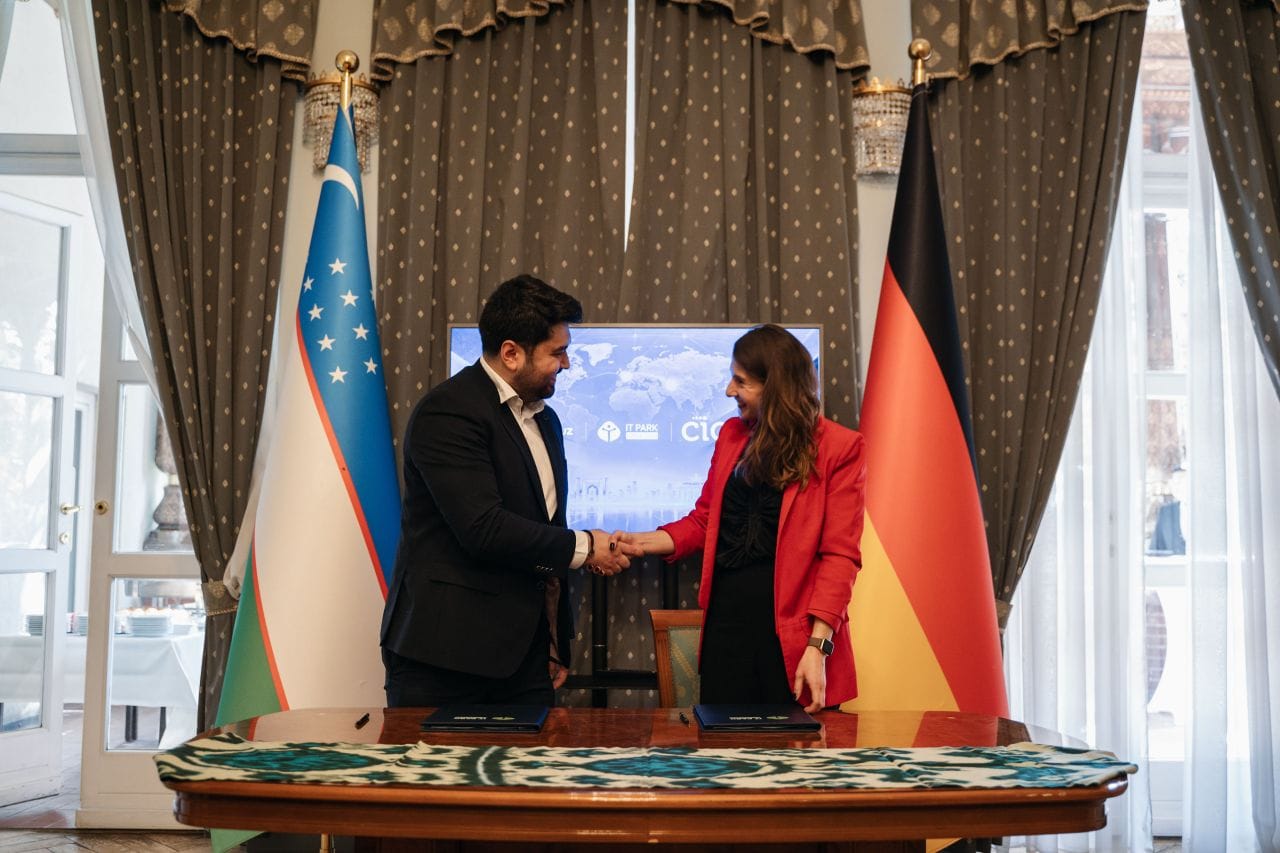
This work extends far beyond Poland and Germany. In Berlin, Geresz helped build a bridge between European tech and Central Asia. During the Digital Uzbekistan – Germany showcase at the Uzbek Embassy, CIC Berlin signed a partnership agreement (MoU) with IT Park Uzbekistan. The end goal was to connect Uzbekistan’s growing pool of tech talent with the broader European market, giving both sides pathway for exchange, cross-border scaling, and ecosystem alignment.
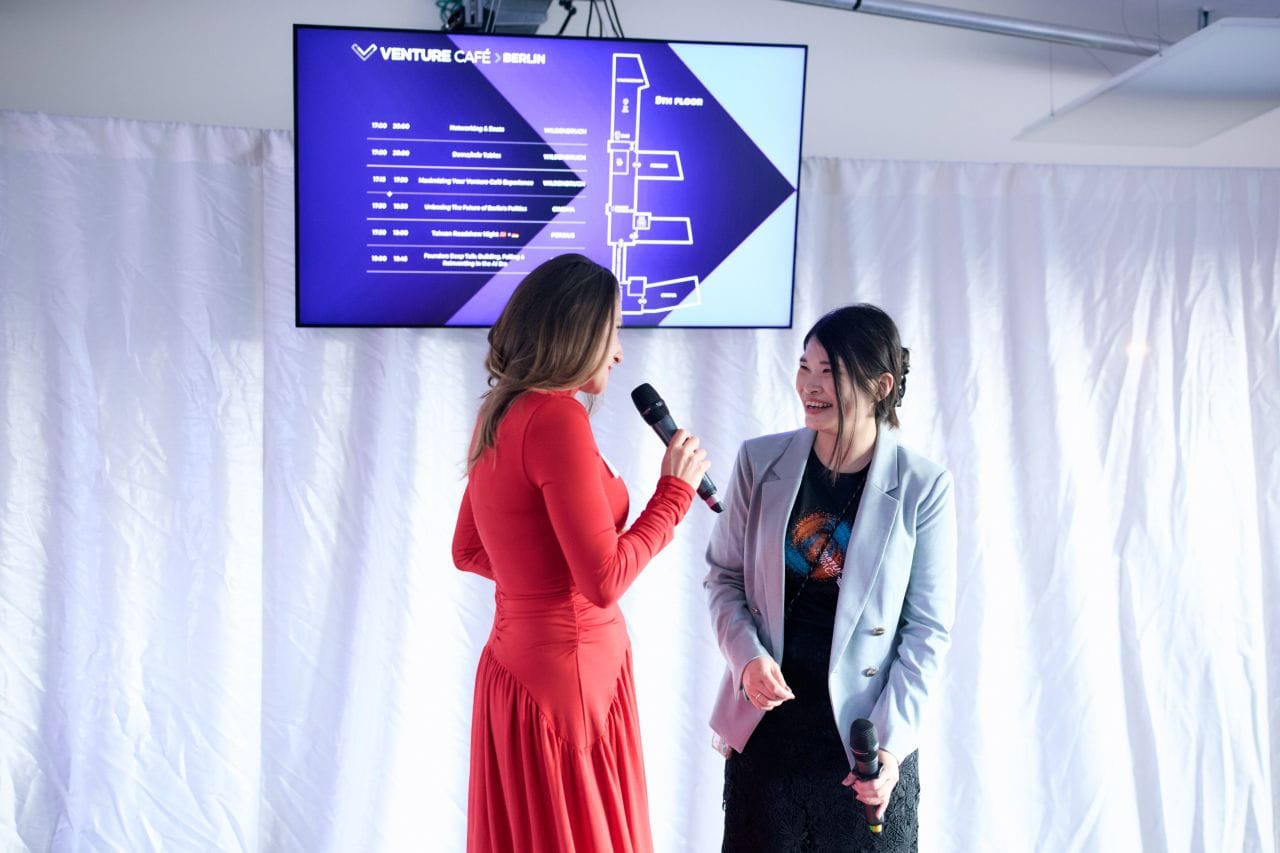
Geresz also helped build connections with East Asia. At a Venture Café Berlin gathering in September, CIC Berlin signed another partnership agreement, this time with Taiwan’s Startup Terrace. This deal links Berlin’s startup network directly with Taiwan’s strong hardware and technology sector, making it easier for founders in both regions to expand into new markets and find international investors.
For Geresz, signing agreements in Warsaw, Tashkent, or Taipei is just the starting line. The real test is what happens next: turning signed papers into real connections, working pilots, and new opportunities for founders. It all comes back to her core message: meaningful connections don’t happen by accident. They happen because people build the systems to make them work.
Shifting competition to collaboration
When asked about the biggest obstacle in her work of supporting the connections between ecosystems, Ewa didn’t point to funding gaps or regulatory red tape as you might expect.
“The most challenging is trying to change people’s mindset to shift from competition to collaboration."
In many European cities, ecosystem actors (from incubators to municipal bodies) still view each other as rivals for limited resources. This “tiny battles” drain energy that could otherwise be spent on joint projects. “I have noticed similar dynamics even within the same country: cities often compete for the same events, sponsors and media attention”, creating a fragmented landscape that sets back collective progress.
“We are losing energy with these tiny battles inside of the ecosystems… Why are we competing who will do a better event for one city, let’s collaborate and do one for the whole country.”
However, this isn’t just about a lack of networking events and opportunities. This is a fundamental trust gap that reflects on the individual level as well, Ewa believes. For decades, the narrative in regional countries, from Poland and Romania, to the Baltic states, was one of catching up. This created a generation of founders who are resilient and technically brilliant, but also intensely reserved and guarded. Ewa points that, while an American founder might shout their idea to get as much feedback as possible, a CEE founder often stays in the shadows, and builds their thing in silo…
Engineering Serendipity: The power of intentional meetups
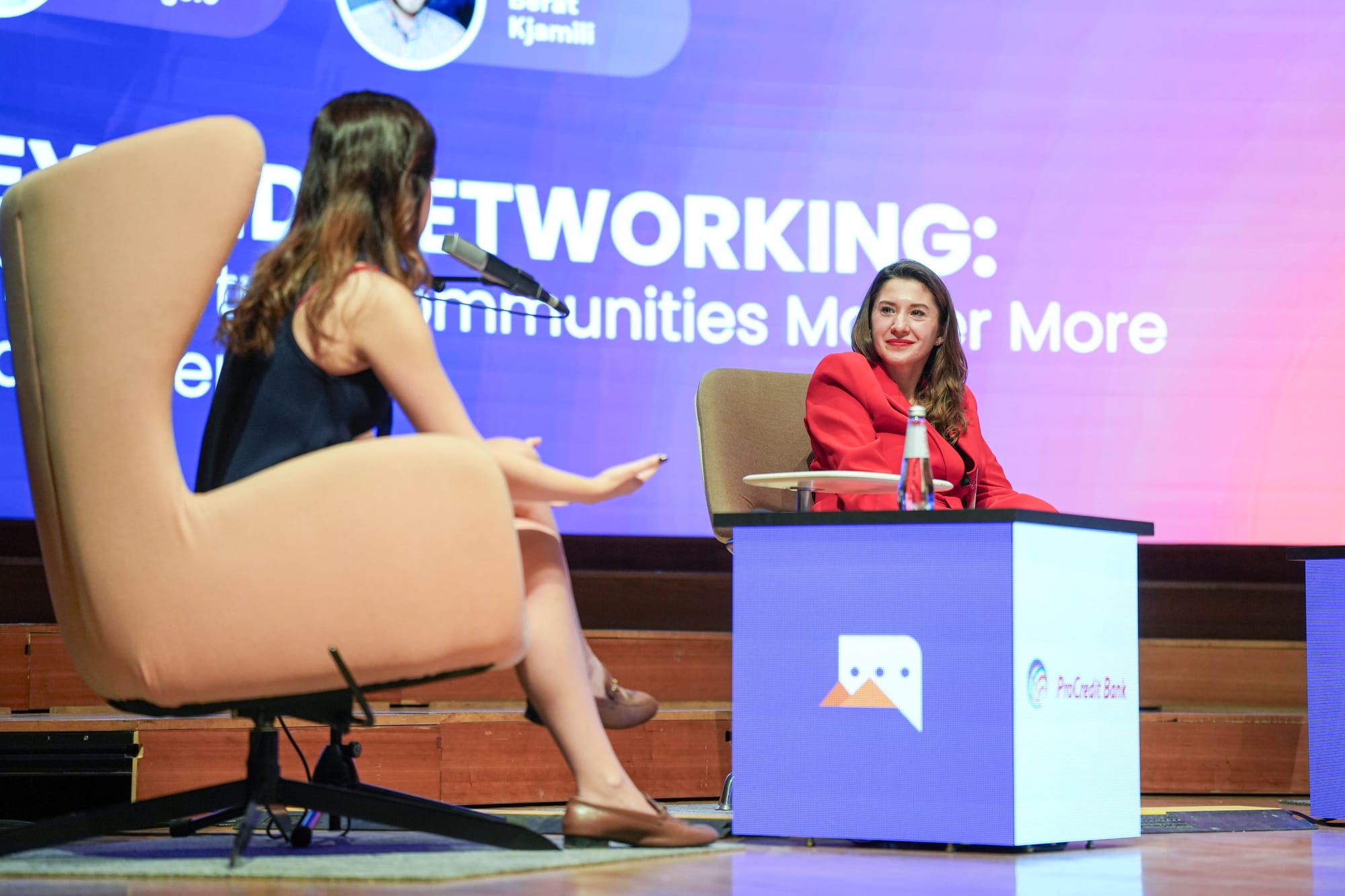
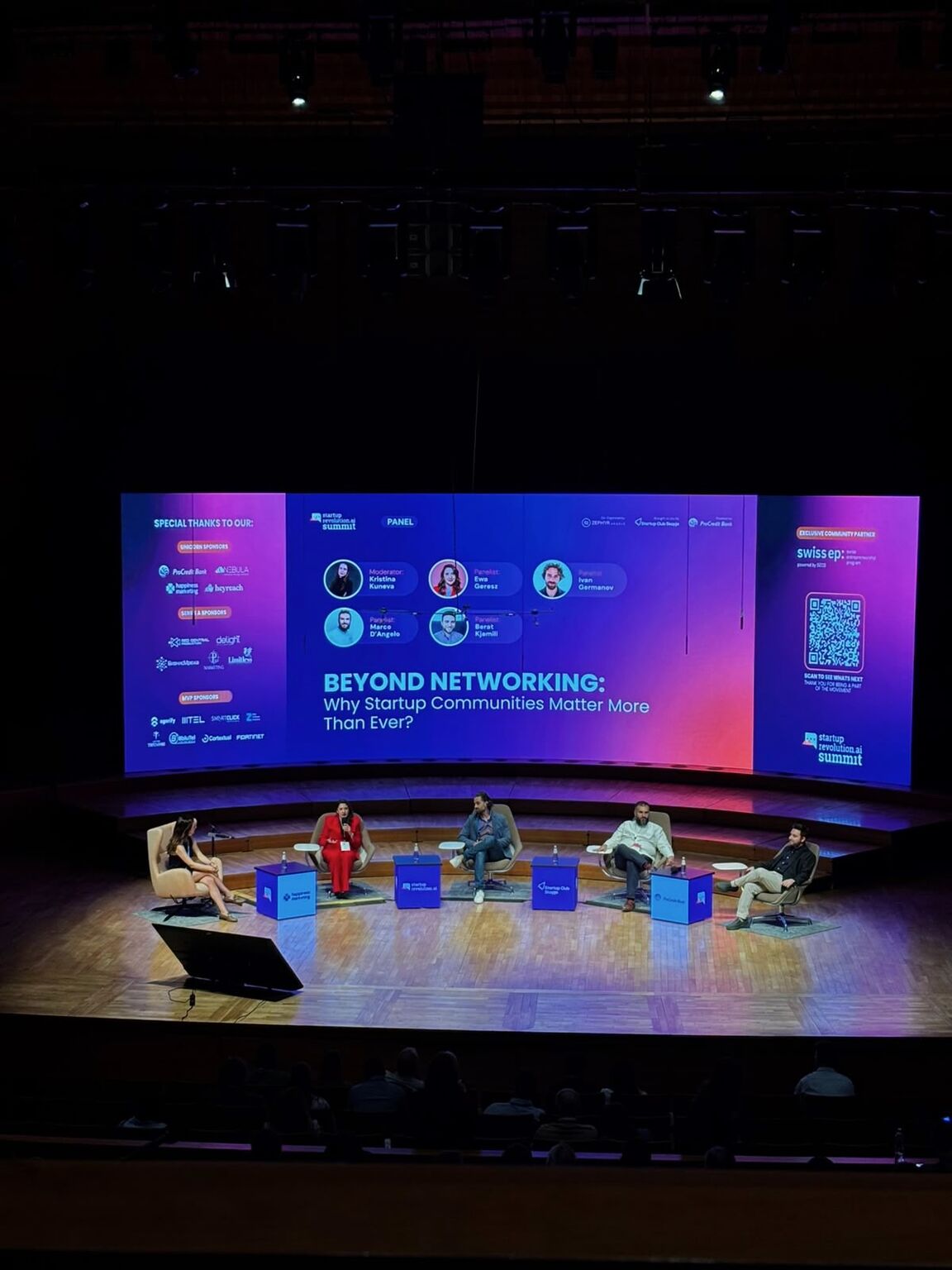
Just before we had our conversation at Startup Revolution AI Summit, Ewa participated in the panel “Beyond Networking: Why Startup Communities Matter More Than Ever”, moderated by The Recursive’s Kristiana Kuneva. There, after being asked on what makes up a startup community, social impact tech entrepreneur Berat Kjamili mentioned the term — serendipity. He described community as the luck of ending up in the same place at the same time, and then making something of it: learning people’s stories, not just their names.
Ewa later came back to the term, and gave the word a sharper edge. Serendipity, she argued, isn’t just luck that happens to you — it’s something you can set up. As she put it, “you will not experience serendipity if you don’t decide to leave your home.” That idea is where our conversation picked up.
“We cannot predict what is the outcome of the serendipity, but we can design it."
 Ewa Emilia Geresz
The formula? Assemble a mix of entrepreneurs, investors, corporates, policymakers and talent from completely different backgrounds and drop them into a setting where their paths would never normally cross. The magic happens when the environment is deliberately designed to break down silos: by choosing a neutral venue, a shared agenda and an interactive format that forces conversation rather than passive listening.
A recent example of this approach took place when a Taiwanese delegation was paired with German ecosystem actors and a handful of local startups for a Venture Café pitching session. During one afternoon, Geresz recalls, more than 200 participants from two innovation hubs filled a conference hall, exchanged contacts, demoed prototypes, and debated market strategies.
These curated encounters are far more than casual networking mixers; they give participants a clear reason to stay engaged beyond the initial hello.
What bread has in common with cancer cells?
For example, a startup struggling with food‑tech logistics might find a fintech partner willing to co‑design a payment‑workflow, while a health‑tech firm could tap into a logistics company’s distribution network to speed up clinical trial deliveries. The most vivid illustration of this came from the Japanese bakery‑scanner story, Geresz shared.
"One Japanese bakery staff often struggled to tell, just by looking at it, which type of bread they were handling and how it should be packaged. To solve this, a team of engineers created a scanner that analyses the microscopic texture of each loaf." When a health‑tech researcher saw this solution, and sat down next to the engineers, she noticed that cancer cells share a similarly irregular, porous architecture.
“What if we fed medical‑imaging data into that system?” she asked, instantly fueling further brainstorming. The conversation quickly moved to practical, and they agreed to make a prototype that should repurpose the bakery‑scanner’s pattern‑recognition algorithm to detect minute variations in tissue density on early‑stage tumor scans. The end result was a low‑cost cancer‑detection scanner for pre-liminary detection.
These examples underline why concrete reasons for happenings matter. Structured projects, joint hackathons, and pilot‑testing agreements can turn a fleeting moment of serendipity into a new solution. As Ewa emphasised, “We need more trust. We need more collaboration to help each other,” and the engineered environment supplies exactly that trust‑building framework.
Running clubs & other unexpected connections
Beyond formal events, we also touched upon a more unconventional community: the Founders Running Club that Ewa is part of. “You are not meeting random people; you are meeting people who are tech‑savvy, aspiring and established founders, or seasoned operators from startups.” It all started during in 2022, with just 4 runners during a jog in San Francisco. Today, the Club brings together more than 50k members, across 45 countries on 5 continents.
The club offers a built‑in accountability system: members hold each other to fitness and business goals alike. "The community keeps you moving. When you hit a rough patch, the people around you push you forward and hold you accountable.”
However, the international aspect of it is what Ewa appreciates especially. “Because it’s in different countries and cities, you can show up somewhere for a weekend, join the community and run with them. It works whether you’re in Berlin, Warsaw or elsewhere.” So, instead of organizing meetings, you can quickly get to know the atmosphere and status of the ecosystem just by running.
“If serendipity is too broad, like a city‑wide New Year’s Eve party, you’re unlikely to bump into the right person. The running club hits the sweet spot between a narrow silo and a chaotic crowd.”
The “Give Before You Take” Playbook
If we look at CEE and our cross-border collaboration, it becomes more evident the path forward is less about pouring more money into it and more about rewiring the cultural fabric that governs how founders, investors, governments and ecosystem builders interact. If the region can internalise that lesson, the next wave of innovation may well be born not in a single city, but in the space where Warsaw meets Berlin, where a running club meets a startup pitch, and where intentional chance becomes the norm rather than the exception.
So, it shouldn’t suprise you that as final advice to anyone building a cross‑border community, Geresz’s mantra is straightforward: “Give before you take.”
In practice, this means approaching potential partners with a clear value proposition rather than a request. “I’m always first thinking, ‘Okay, where can I be useful for you?’” she comments. By establishing a “bank account” of goodwill, you can call on that relationship when you need the support yourself.
However, she also warned against one‑sided relationships. “If someone only reaches out when they need something, they treat you as a tool. I’m a natural giver, but I stop after the third ask if it’s one‑sided.” Sustainable collaboration, she argues, requires reciprocity and a long‑term view.
Lessons for new community builders
To conclude, our conversation distilled several actionable insights for anyone looking to stitch together a trans‑national tech community:
- Shift the narrative – Reframe competition as a shared challenge; highlight success stories where collaboration led to tangible outcomes.
- Design the encounter – Create events with a clear, cross‑disciplinary purpose. Small, intentional gatherings often yield more serendipitous outcomes than massive festivals.
- Leverage existing partnerships – Use government‑funded programmes as scaffolding for deeper private‑sector ties.
- Blend formal and informal – Combine structured sessions with low‑key activities to foster trust in a more relaxed setting.
- Adopt a giver mentality – Offer resources, mentorship or venue space first, but don’t forget to ensure relationships stay balanced.


Member discussion