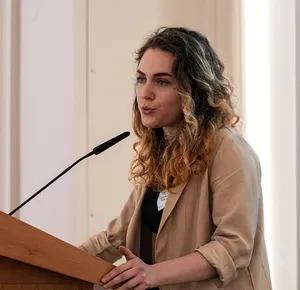
The ability to build is no longer necessarily what separates a good founder from everyone else. But it also creates another problem: if everyone can build more, faster, how do you know what is actually worth building?

For Hadas Zucker, a Berlin-based transdisciplinary advisor, this is becoming one of the defining questions for innovators. She has contributed strategic foresight to the World Economic Forum, Cannes Next, re:publica Berlin, Tallinn Digital Summit. Zucker has spent two decades working across business, culture, creativity, and transformation, combining strategic design and systems thinking with fields less commonly associated with startup building: storytelling, emotional intelligence, aesthetic inquiry, and what she calls “radical imagination.”

Her argument is that as AI makes execution increasingly accessible, competitive advantage may move elsewhere — towards the ability to detect genuine human needs, behaviors, emotions, and cultural shifts before they become obvious in the data. Or, as Zucker deliberately puts it: we need to get better at reading the vibes.

We sat down with Zucker to discuss what that actually means for founders and investors, why she believes AI could distort the signals companies traditionally use to understand their markets, why friction shouldn't always be designed away — and why the next generation of innovators might need literature, art, travel, and emotional intelligence almost as much as technical expertise.

This post is for subscribers only

Sign up now to read the post and get access to the full library of posts for subscribers only.

Sign up now Already have an account? Sign in