


Try researching Georgia's startup ecosystem, and you'll quickly notice how little information is available. Who are the country's leading startups? Which investors are backing them? How active is the venture capital ecosystem? Compared with more established tech hubs, Georgia remains largely under the radar.
Yet the numbers suggest a different story. According to StartupBlink, Georgia is home to 131 startups. More strikingly, the ecosystem grew by 78% over the past year, making it one of the fastest-growing startup ecosystems in the region.
Georgia has spent the past decade building its startup ecosystem. Since its establishment in 2014, the Georgia Innovation and Technology Agency (GITA) has invested more than $14 million into around 240 startups, while creating a nationwide network of ten technology parks that now serve as hubs for founders, researchers and investors. The country's appeal extends beyond grants. Registering a business can take less than thirty minutes, while technology companies exporting services may qualify for Georgia's Virtual Zone Person status, which offers significant tax incentives for eligible IT businesses.
That ambition is increasingly attracting international organizations to establish a regional presence in Georgia. Among the most prominent is 500 Eurasia, the regional arm of the Silicon Valley venture capital firm 500 Global, which has made Tbilisi a meeting point for founders and investors from across Central Europe, the Caucasus and Central Asia.
Building a regional startup network
Today, through 500 Eurasia, the firm has broadened its presence in the region, working with startups as well as public institutions to support the development of the local innovation ecosystem.
“Eurasian founders inherently build for fragmented markets from day one. Unlike Silicon Valley/US founders who scale domestically first, these entrepreneurs develop cross-cultural product adaptation as a core competency — essential for global expansion,” Pedro Santos Vieira, Partner at 500 Global in an interview for The Recursive.
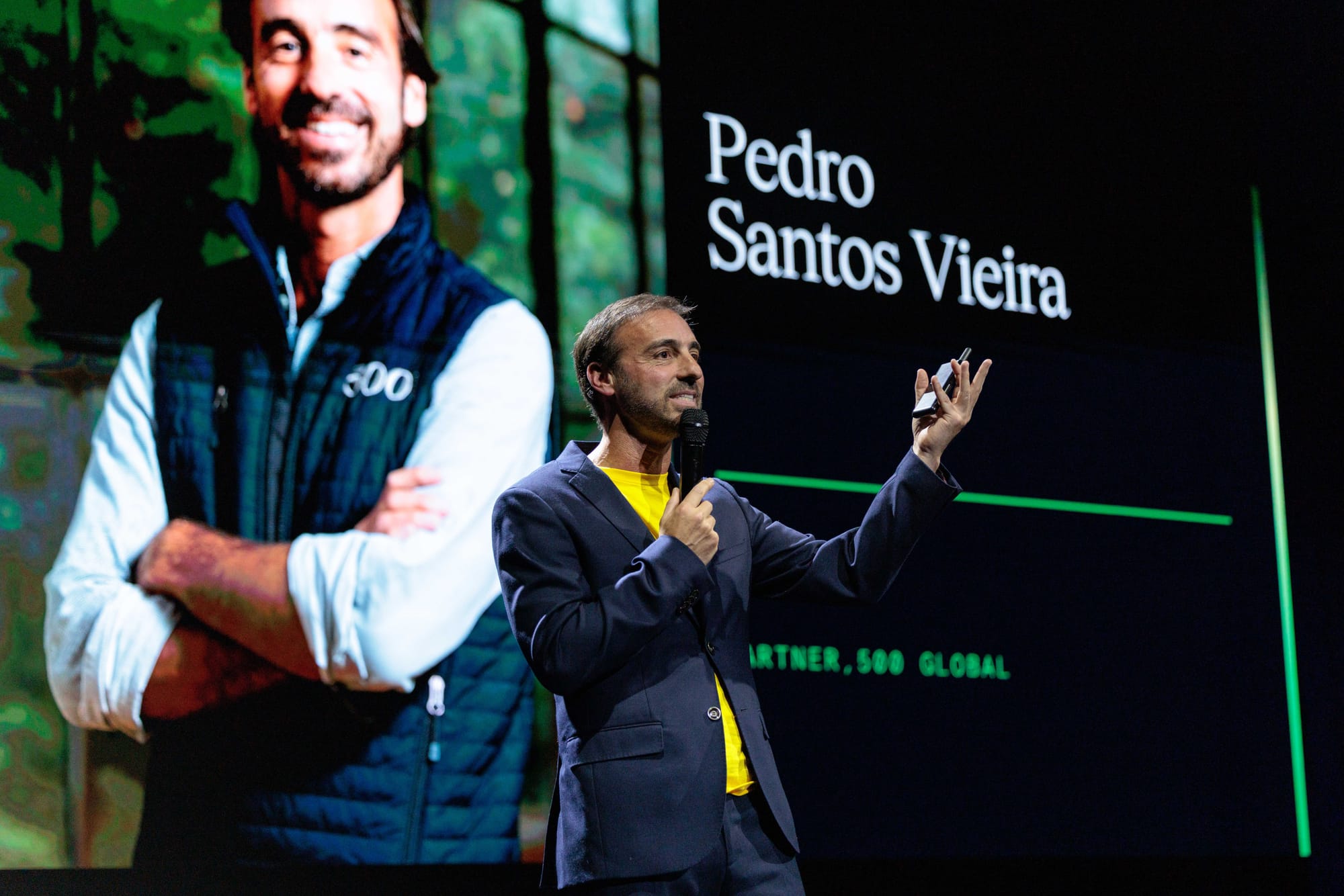
The venture capital firm made its first investment in the region more than a decade ago. Today, through 500 Global (Eurasia), it has expanded its focus. Working alongside GITA and Bank of Georgia, the program brings together entrepreneurs from the Baltics, the Balkans, the Caucasus and Central Asia.
The accelerator's role extends beyond twelve weeks of mentorship. Through introductions to global investors, participation in events such as Web Summit and SLUSH, and access to one of Silicon Valley's most extensive founder networks, it offers something many entrepreneurs from the region have historically struggled to find: a direct route into international markets.
Building beyond domestic markets
The curtain rose not on a play, but on a startup pitch.
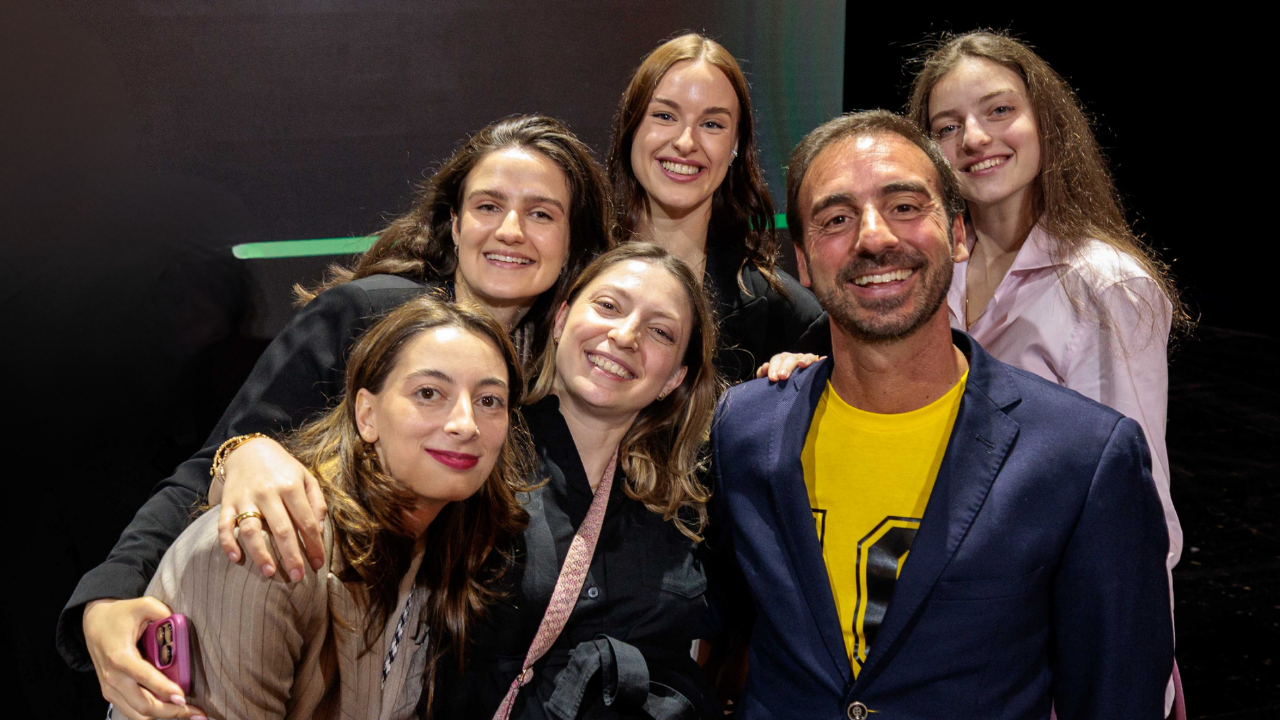
For one afternoon in June, the stage of Tbilisi's historic Rustaveli National Theatre belonged to entrepreneurs as 500 Global in Eurasia hosted its Batch 10 Demo Day. The velvet seats were occupied by startup founders, venture capitalists, operators, and ecosystem builders from nearly 30 countries spanning Central Europe, the Caucasus and Central Asia.
As some of the founders put it, "going global" is no longer something companies wait to pursue after raising larger rounds. Instead, it is part of the plan from the very beginning.
The nine startups presenting at Demo Day had that approach. Their products ranged from automated penetration testing and vulnerability analysis to AI-powered debt collection, customer intelligence, restaurant workforce management, clinical trial recruitment and financial compliance. On paper, they looked like a familiar cross-section of today's enterprise software landscape, with AI integrated into most of their products. Explore all Batch 10 startups here.
One of the things that stood out was that the startups were not directly asking for money. They were showing traction, expansion plans and acquisitions of other companies.
Some of the founders had spent years inside the industries they were now trying to reinvent. They had managed restaurant chains, scaled bootstrapped businesses through war and economic uncertainty, worked alongside doctors, led digital transformation projects or built enterprise software long before generative AI entered the mainstream. Conversations with several founders suggested that technology was rarely the starting point.
One example was Vadym Bortnyk, co-founder of MaiCall. "My entrepreneurial journey started long before I was born," he tells me with a smile. It sounds like an unusual way to introduce yourself until he explains.
"My mom is a mathematician, my dad is an entrepreneur, and they ran a sewing factory and a restaurant. From the age of five, I grew up inside their businesses."
His own career has been anything but predictable. He started with a single café before growing FreshLine into a restaurant chain of more than 50 locations across Ukraine, Belarus and Kazakhstan, selling over 15 million sandwiches. Then he left hospitality altogether.
"I wanted problems of a different scale." Those problems first took him into public service, where he led the Directorate of Regional Digitalisation at Ukraine's Ministry of Digital Transformation, coordinating reforms across more than a thousand municipalities. Later came fintech, where he managed online lending operations in Sri Lanka and Mexico, overseeing roughly 30,000 loans every month and a team of 170 debt collectors.
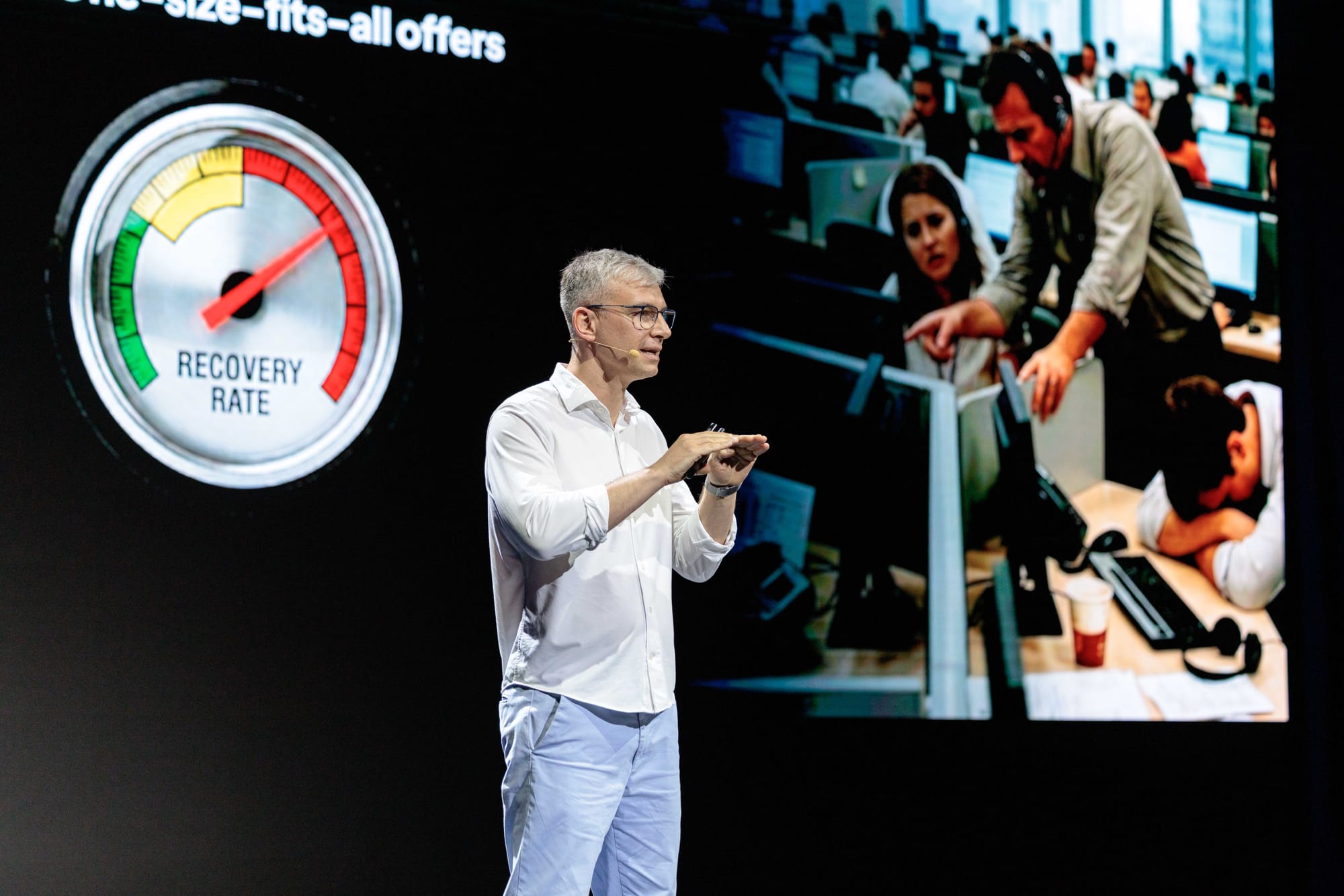
That was where he noticed something that most people would probably never think to measure. "Machine learning collects debt better than people do," he said.
The observation eventually became MaiCall, an AI-powered collections platform aiming to rethink how debt recovery works altogether. Initially, the company struggled to explain what set it apart. During the accelerator, mentors challenged the team to focus on the outcome customers actually cared about: recovering debt. "We came in selling software," Bortnyk says. "We walked out delivering money."
Experience before disruption
One cliché refuses to disappear from startup culture: the best companies are born in garages. Some founders in Tbilisi would probably disagree.
None of them described a ‘eureka’ moment. There was no late-night brainstorming session or sudden realization that AI would change everything. If anything, their stories developed over years spent inside industries that had become so accustomed to inefficiency that almost nobody questioned it anymore.
For Mariam Kharazishvili, co-founder of Clinova, the company began with a project that had nothing to do with healthcare. Her previous venture built augmented reality environments for brands. One of those clients happened to run clinical trials. That assignment exposed a world few people outside pharmaceutical research ever see.
"Hospitals spend at least half a year manually reading thousands of handwritten records just to start a trial," she recalls. "And eighty percent never finish recruitment in time."
The timing was significant. According to McKinsey, their share of trial sites increased from 49% in 2005–2014 to 65% between 2015 and 2024. Drug developers were increasingly looking beyond traditional markets, attracted by lower costs and more diverse patient populations. The need for more efficient recruitment and data infrastructure became even more pressing.
"The market exploded," Kharazishvili says. "The infrastructure didn't."

She pauses before adding the sentence that has since become Clinova's positioning. "Clinova is the infrastructure."
Like many founders in the cohort, Kharazishvili entered the accelerator believing she understood her market. Three months earlier, Clinova had been largely focused on CIS countries. By Demo Day, the conversation had changed towards Saudi Arabia and the broader Middle East, where governments have made healthcare digitisation and biotechnology national priorities.
"The market found us before we found it," she says. “Our focus over the next six months is deploying Clinova across a minimum of five hospitals in Saudi Arabia, alongside expanding market coverage in Georgia. That's the only milestone that matters.”
The pivot wasn't driven by instinct alone. Mentors repeatedly challenged the team's enterprise sales strategy, questioning whether a founder-led approach could scale in an industry where purchasing decisions often involve multiple stakeholders, lengthy procurement cycles and conservative institutions.
"The toughest feedback," she remembers, "was that our sales motion wasn't built for enterprise healthcare." Rather than defending their approach, the team rebuilt it. They came out with a sharper ICP, a structured sales process, and a strategy that cut their sales cycles significantly.
"500 kicked exactly where it hurt most. And that's what good mentorship does," Kharazishvili adds.
Rethinking the growth strategy
If Clinova's story is about discovering a market, Alina Golubieva's is about rediscovering a company. Unlike many first-time founders, she arrived at the accelerator with very little to prove to herself.
"My journey hasn't been linear," she says. Long before launching Karpatia Benefits, Golubieva had already spent more than a decade building businesses. One of them grew from three employees to one hundred and twenty, reaching $15 million in revenue without raising external capital. Most of that growth happened during Covid-19 and continued through Russia's full-scale invasion of Ukraine.

Karpatia Benefits itself emerged from a surprisingly ordinary observation. Companies genuinely wanted to invest in employee wellbeing, she explains. Yet the systems behind those benefits remained trapped in spreadsheets, email threads and manual administration. HR teams spent countless hours coordinating processes that employees often barely noticed.
"What I enjoy most," Golubieva says, "is taking something painful and bureaucratic and making it feel simple."
That philosophy sounds almost understated compared to the hyperbolic language common in venture capital. It was also a common theme among several founders in the cohort, many of whom spoke about solving specific problems rather than reinventing entire industries.
They wanted to make systems work. Yet even for someone with years of entrepreneurial experience, the accelerator introduced an unfamiliar way of thinking. "Before 500 Global," Golubieva says, "I built businesses on classic bootstrap logic. Grow within your cash flow. Keep operations tight. Protect what you're building."
Venture-backed companies, she discovered, play by different rules. "The program was my first deep exposure to what building for hyper-growth actually looks like. It's a different way of thinking about market pull, focus and speed."
Still, she isn't convinced founders should abandon everything they learned before venture capital entered the picture. Her answer offers perhaps the clearest reflection of how startup financing itself has changed over the past few years.
"My takeaway isn't 'grow at any cost,'" she says. "It grows fast, but keep enough ground under your feet to navigate what's happening around you."
That shift was also evident in the experience of Nurdias Aitbayev, co-founder of MyBots.pro, building AI agents that handle sales end-to-end for SMBs and enterprise teams.
When he joined the accelerator, the company positioned itself primarily as a chatbot platform. During the program, mentors challenged that framing, encouraging the team to think beyond individual AI tools and instead build an AI workforce platform.

“We fundamentally changed our approach to sales and marketing, and the results speak for themselves: 12 weeks of work in the program led to 2x revenue growth," Aitbayev explains.
"Perhaps the biggest difference is that we started thinking globally," he adds.
Learning to think bigger
Unlike most founders pitching that day, Umid Akhmedov was part of the 500 Eurasia alumni, returning to share what he had learned since completing the accelerator. As founder of Tezbor, for him the hardest lesson of the accelerator arrived in the form of honest feedback.
"My six-year-old would be able to make a better slide than you."
He still remembers it almost word for word. After more than fifteen years inside corporations, including Saxo Bank, Ørsted, Microsoft and Danske Commodities, he wasn't accustomed to critique delivered with such directness.
"In the corporate world," he explains, "feedback arrives wrapped in three layers of diplomacy. In the startup environment, it arrives raw and direct."
It didn't change the strategy or product, Akhmedov tells me. "It changed something more fundamental. It knocked the corporate polish off me."
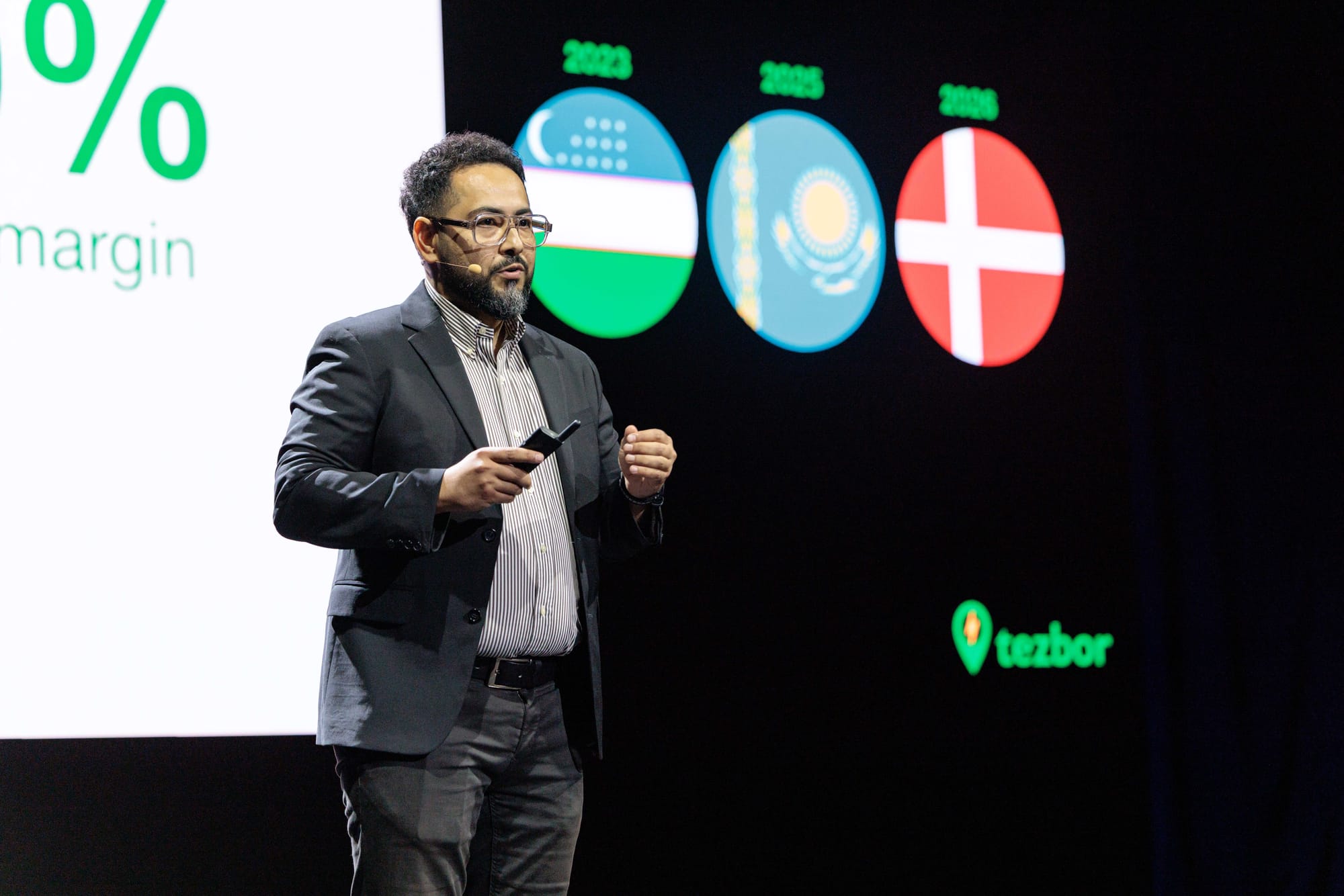
Since presenting at Demo Day a year and a half ago, the company has significantly reshaped its business. It pivoted from coordinating individual couriers to building software for logistics companies, expanded its presence in Kazakhstan, and signed its first paying customers in Europe.
The momentum continued with the acquisition of Fargo, one of Uzbekistan's best-known logistics companies, a deal that Akhmedov said doubled the startup's monthly recurring revenue while expanding its delivery network. At the same time, Tezbor has secured commitments from investors including SQB Ventures, Orbit Ventures and a Danish angel as part of an ongoing $1 million seed round.
“Operationally, we're targeting roughly a doubling of monthly revenue and active clients, and a tenfold expansion of our parcel shop presence in Uzbekistan (around 1,400 shops) with the utilization discipline baked in from day one this time,” Akhmedov explains.
Building companies before they build startups
Whether any of the companies presenting in Tbilisi become the region's next unicorn remains to be seen. What already feels evident, however, is the kind of founders Georgia is helping bring together. A new generation of founders is arriving with expertise earned long before launching a startup — running businesses, leading digital transformation or working inside the industries they now seek to improve.
If Georgia continues to bring those founders together, its contribution may extend beyond producing the next unicorn. It could help strengthen a regional network of entrepreneurs already building across borders.
The 500 Global Accelerator Program in Eurasia combines in-person and remote phases focused on growth, fundraising, and product-market fit. Participating founders receive mentorship, access to a regional founder community, and the opportunity to secure up to $100,000 in funding. The program accepts applications on a rolling basis, with its 11th cohort set to begin in September 2026.
*Photos: Courtesy of 500 Global


Member discussion