


Many of the companies who want to grow skin in a lab or analyze dental X-rays with AI are now ending up in Graz and Vienna. Two young companies from France and Slovakia recently founded subsidiaries in Austria, and their reasons underline the status Austria now enjoys as a life sciences location: research partners who respond quickly, a funding system that works, and a political environment that does not scare off investors.
Both are docking onto a mature ecosystem. The federal government has anchored life sciences in its Industrial Strategy 2035 as one of the most important technologies of the future, and according to the Austrian Startup Monitor 2025, 14.4 percent of all domestic startups are already active in the field, as the Austrian Business Agency (ABA) summarizes.
AI Dental: From Bratislava to Vienna
AI Dental (AI:D) develops AI for dentistry and has two products on the market. EDU AI:D is a learning platform on which dental students train their diagnostic skills using thousands of 2D X-ray images; according to CEO Olga Shebanova, the platform is already running at 16 universities worldwide. The second is ClinicalAID, software that analyzes patient images and shows doctors the probability of findings. The product has just received CE marking as a medical device and serves dentists as a second opinion.
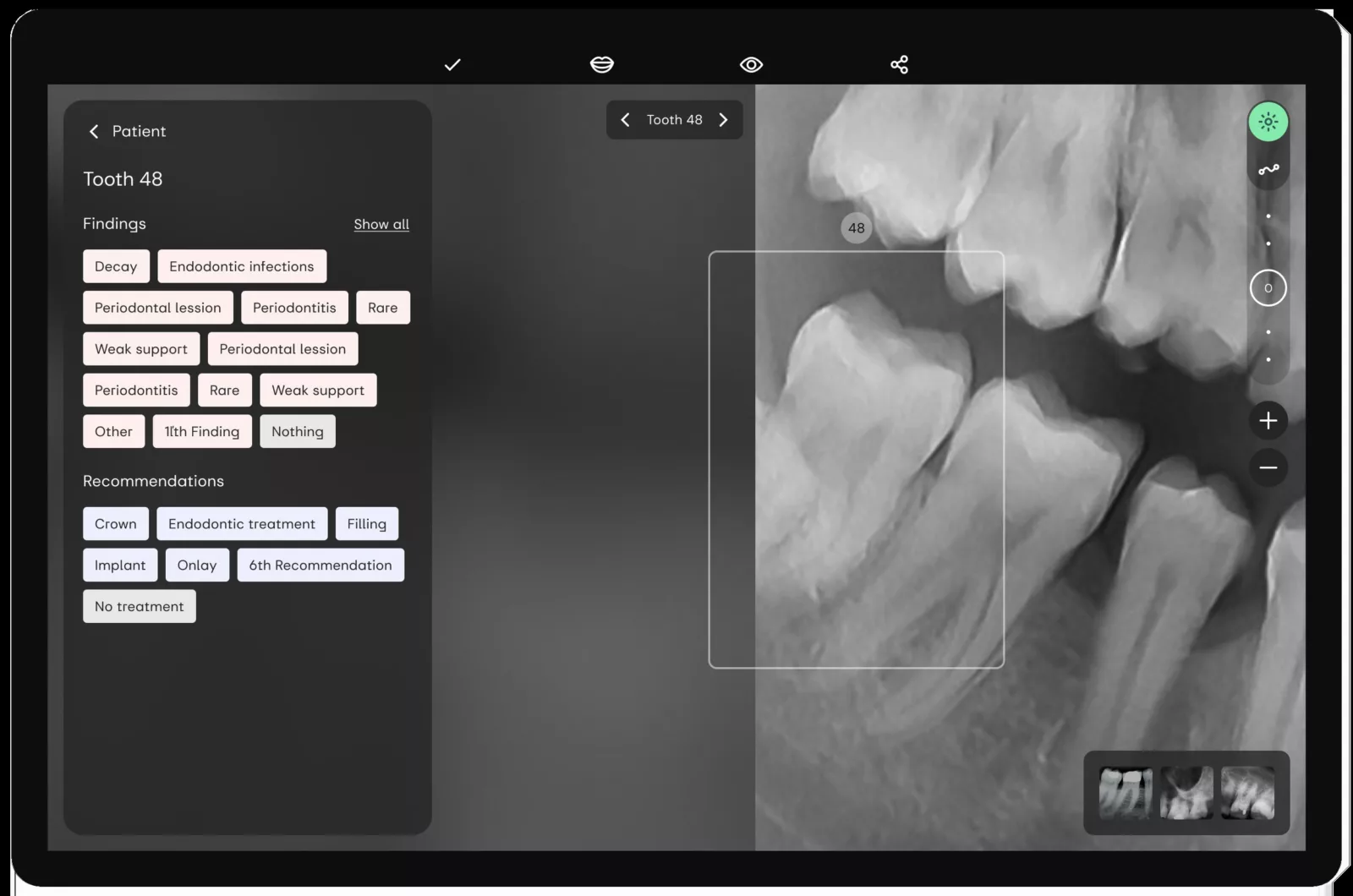
Shebanova gives three reasons for the move to Vienna. First, half the team already lives in Vienna and used to commute to Bratislava, and AI Dental has already recruited specialists in Austria. Second, the political situation in Slovakia, which she says has affected financing:
“International investors who put capital into an already risky startup at least want the certainty that the government and the laws won’t change constantly. Austria is stable, has consistent laws and gives stronger support to R&D companies and startups.”
Third, research: AI Dental has been working with the Medical University of Vienna for almost three years, with pilot projects and joint development. Through the ABA, Shebanova learned that funding from FFG and aws is available for such collaborations. The startup has since applied to the FFG for support for a research project on rare diseases in dentistry, together with MedUni Vienna. The application has not yet been decided, but for Shebanova the process itself was a signal:
“What matters most to me is the feeling that the system cares about innovation and small companies. Even if I fail with the first application, I’ll find other ways and contacts because the ecosystem works. That was a big green flag for me.”
Access to public funding is crucial in medical technology in particular, the CEO says, because venture capital investors often don’t want to finance research phases, and without research there is no product.
Docked at the AI Factory in Vienna
Since autumn, AI Dental has had its office at the AI Factory Austria AI:AT in Vienna’s St. Marx district, following a selection process under the EU initiative. Shebanova had mainly expected a free desk:
“I was very positively surprised because it really works in practice. The team is proactive and actively looks for ways to support startups. That’s not a given with initiatives like this.”
AI Dental is keeping its Bratislava location, where half the team continues to work. Growth and scaling, however, are to run through Vienna. In terms of content, the company wants to go beyond dentistry: many systemic diseases can be detected during a visit to the dentist, which is why the AI is to establish links to oncology, cardiology and neurology in future. Shebanova also sees Vienna as a better base for a later expansion into Germany or France, though not before 2028.
Ingenskin: Skin Substitute From France for Graz
Ingenskin from France is working on an autologous, pigmented skin substitute for chronic wounds, burns and complex wounds. From a small skin biopsy taken from the patient, the three cell types of the skin (keratinocytes, fibroblasts and melanocytes) are grown in the lab and combined with a collagen matrix into new skin with a dermis and epidermis. This is meant to close the wound permanently and also restore pigmentation. “We produce the patient’s own skin in the lab,” summarizes CEO and co-founder Patrick Alexandre Manu.
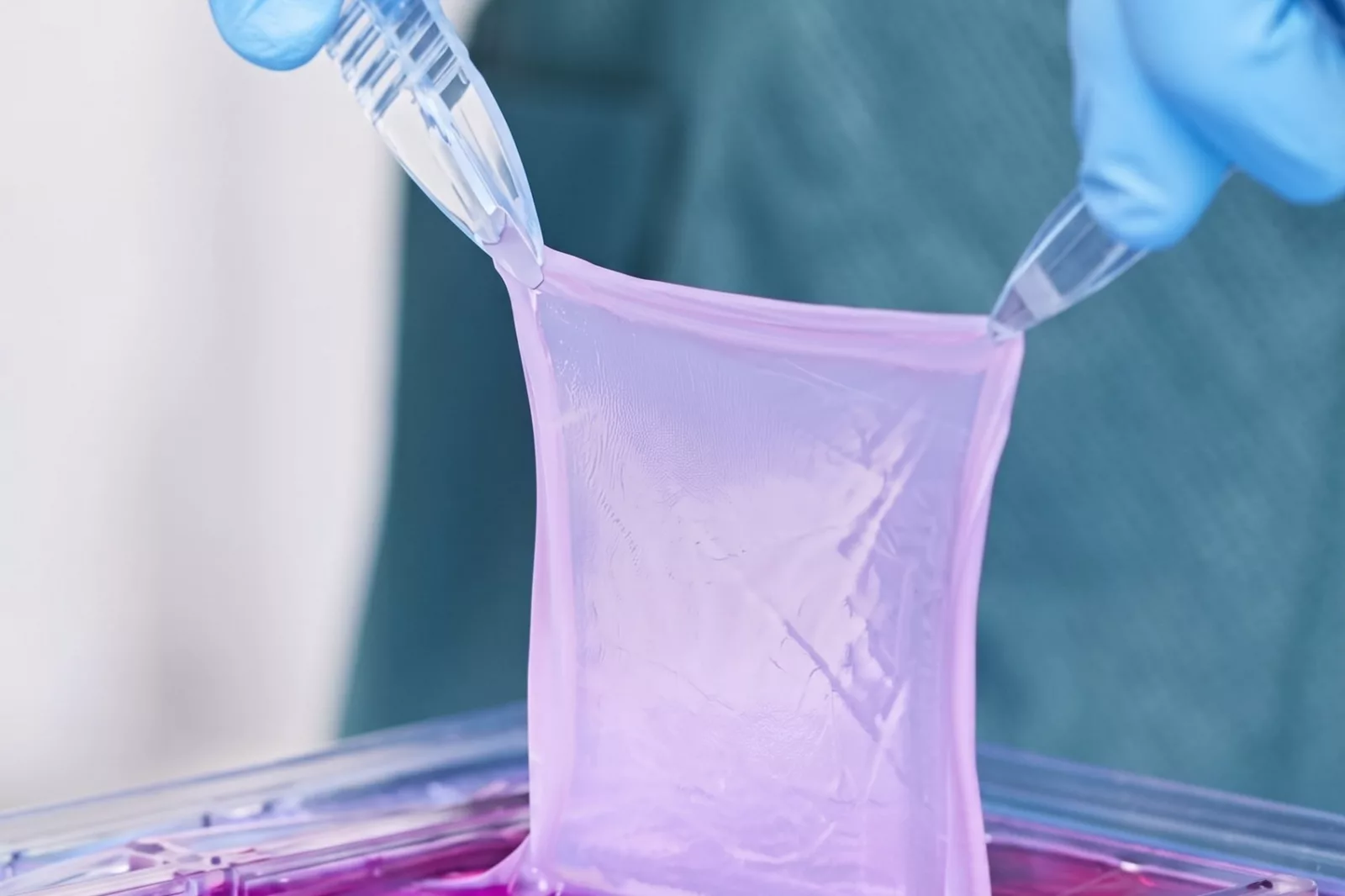
The company is in the preclinical phase; no patient has yet been treated with the product. The first clinical trial in Austria is the declared goal, and the collaboration with the Medical University of Graz is currently being structured. To that end, Ingenskin recently founded a subsidiary in Graz.
Manu came to Austria through his search for leading experts in burn medicine. He came across Lars-Peter Kamolz, professor at MedUni Graz, and got in touch. A visit to Graz revealed what had been hard to find in France:
“In Graz we can do two things at once: the clinical development and the scientific lab with GMP certification. You don’t see that often. Normally you have to go to an external contract manufacturer for that, who thinks more about revenue than about development.”
Before deciding on Europe, Ingenskin had also held talks in Saudi Arabia, the United Arab Emirates and Qatar, where a lot of money is flowing into biotech. In the end, the decisive factors were the wish to gain a foothold in Europe first and the speed with which doors opened in Austria:
“The ABA was great and connected us directly with the right people, who in turn connected us further in no time at all. Even though we come from another country, we were welcomed very warmly and quickly became part of the Austrian ecosystem. That’s quite unusual.”
No Time Is Wasted in Austria
Almost all of Ingenskin’s external partners are already based in Austria: a Viennese law firm, advisors in Graz and Vienna, and regulatory and non-clinical experts from Vienna. An office at the Graz Center for Knowledge and Technology Transfer in Medicine (ZWT) is currently being finalized, and in the long term a dedicated lab in Graz is conceivable. Manu himself still commutes but wants to relocate to Graz. He describes the local working style like this:
“In Austria, people want to get things done. If something makes sense and comes through the right people, it gets done without wasting time. That’s exactly the energy we have at Ingenskin too.”
It is a long road to market with several clinical phases; Manu expects the mid-2030s. In the long run, Graz could become the headquarters from which Ingenskin operates across Europe and beyond.
Research, Capital and Anchor Tenants
A dense ecosystem is growing around the two newcomers. According to Life Science Austria, Austria’s life sciences sector counts:
- Companies: 1,174 in biotech, pharma and medical technology, including Boehringer Ingelheim, Novartis and Ottobock
- Employees: 73,437, of whom 24,294 work in research and development
- Revenue: 40 billion euros, equivalent to 8.3 percent of GDP
- Research: 56 research institutions and a research intensity of 20.5 percent
The funding landscape is particularly relevant for startups. The FFG’s Austrian Life Sciences Programme awards up to three million euros per project from a budget of 45 million euros, and the Clinical Trials Austria platform is meant to simplify clinical trials and speed up patient recruitment.
A flagship is taking shape in Vienna’s Neu Marx district: the Life Science Center Vienna, costing around 170 million euros, is to bring biomedicine and AI together on 14,000 square meters by 2029. Its first major tenant will be the AITHYRA institute of the Austrian Academy of Sciences, financed by the Boehringer Ingelheim Foundation with 150 million euros, the largest private research grant Austria has ever seen.
Further examples in which the ABA provided advice show that international companies are making use of the location:
- Ketryx: The Austrian-American scaleup develops AI-powered compliance software for medical technology, has raised a total of 55 million US dollars and runs its central development hub in Vienna with around 40 employees. The ABA helped with banking, transfer pricing and trade licenses.
- Epitome Therapeutics: The spinoff of the European Molecular Biology Laboratory (EMBL) in Rome chose the Vienna BioCenter and started with four million euros. The ABA supported the founding and brought a top researcher from the US to Vienna via the EU Blue Card.
- INNEXIS: The operator of pharma and life science parks is developing a site in Orth an der Donau and plans to take over Novartis’ Life Science Campus in Kundl at the turn of the year, with around 264,000 square meters and more than 100 buildings.
Free Advice for International Companies
International companies and founders considering setting up or expanding a subsidiary in Austria can get free advice from INVEST in AUSTRIA at the ABA. Employers looking for skilled workers from abroad will find support at WORK in AUSTRIA. The Austrian Business Update keeps you up to date.
This article was first published in Trending Topics.


Member discussion